Food and Flavor in XR: Sensory Realism in the Metaverse
The VR Popcorn Dilemma
Food and extended reality may not seem like a natural pair—until you try eating popcorn during a movie in VR. You can’t see it. You spill it. It’s awkward. That’s the point. In 2016, Zaid Mahomedy dubbed this the VR Popcorn Dilemma: a reminder that XR struggles to replicate the full sensory richness of real life, especially when it comes to basic pleasures like food.
So far, the metaverse excels at sight and sound. But sensory realism—especially taste and smell—lags behind. That doesn’t mean XR is useless for the food world, though. Especially in mixed reality (MR), where virtual objects interact with our physical space, food-related applications are already brewing.
Mixed Reality and the Food Industry
1. Dish Previews
Picture a restaurant in 2040. Before the waiter arrives, your smart glasses project a menu directly on the table—complete with 3D previews of your selected dishes. You can inspect serving sizes, textures, and plating before you order. No guesswork.
2. Restaurant Ratings
Yelp and Google reviews meet street-level MR. With smart glasses, ratings float beside restaurants as you walk by, complete with brief pop-up reviews or crowd vibes from past diners.
3. Recipes & Cooking Demos
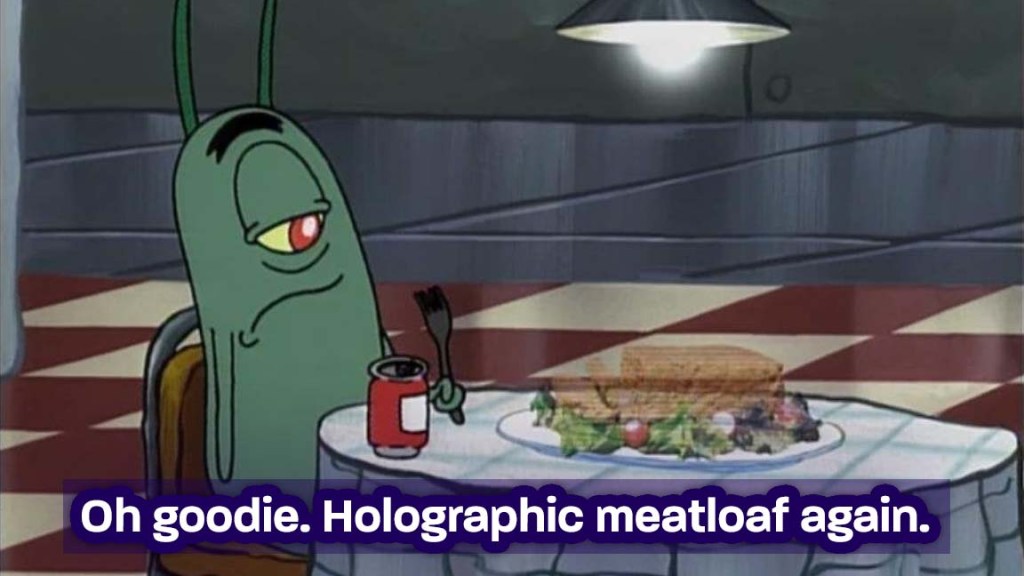
Mixed reality can turn your kitchen into a cooking studio. Your smart glasses scan the contents of your fridge and suggest recipes. Choose one, and a holographic chef (think Gordon Ramsay) appears to guide you through each step—visually demonstrating how to cook what you already have.
4. Dietary Customization
Gluten-free? Keto? Allergic to peanuts? MR could highlight grocery items based on your dietary needs. Red outlines for off-limits products. Green highlights for safe picks. At restaurants, your digital menu could filter everything in real time so you only see what suits you.
5. Expiration Notifications
MR can solve the eternal “when did I open this?” mystery. Instead of relying on static printed dates, you could tag leftovers and opened products with virtual timers. Smart reminders could pop up as food nears its personalized spoilage window.
Taste and Smell in XR: Still a Challenge
Haptic gloves and treadmills are improving how we move and feel in XR, but taste and smell remain major frontiers. Simulating flavors isn’t as simple as visual rendering—it involves chemistry and nerve stimulation.
Some experiments include:
- Electric taste simulators that stimulate taste buds using small currents
- Vocktail, a virtual cocktail glass that uses scent, LED color, and electrical stimulation to simulate flavor
- The “lickable screen” developed by a Japanese professor, which sprays tiny bursts of flavor to mimic different foods
- Aroma Shooter headsets that release timed bursts of scent
These are real prototypes, but still far from mainstream.
The truth? XR won’t replace food. But it can deepen how we experience it.
Other XR Food Futures
- Haptic utensils: Tools that simulate texture and resistance as you eat virtual food, for training or fun.
- Virtual gatherings: Friends sharing a virtual dinner table with real food on their end, but immersive ambiance and conversation in shared digital space.
- Food as media: Chefs could release immersive “edible experiences” that combine storytelling, AR visuals, and coordinated flavors.
XR and the Layered Life
Food doesn’t need to be replaced in the Metaverse. It needs to be enhanced, celebrated, and better integrated. Mixed reality lets us layer information over our meals, share culinary experiences across borders, and visualize our tastes in every sense of the word.
Whether it’s previewing dishes or cooking with a hologram, XR and food are more compatible than you’d think—just don’t forget to bring a napkin.
 OverwriteXR