Avatars, Ownership, and Self-Expression in the Metaverse
The Metaverse is more than just a digital space—it’s a boundless network of worlds where identity, belongings, and expression take on new meaning. Here, self-expression isn’t limited to appearance. It’s your avatar, the things you own, and the digital marks you leave behind.
Your Avatar: The Digital You
Your avatar is your living profile, carrying your style and history wherever you go. Unlike static social media, avatars in the Metaverse are persistent and portable, building your reputation across different worlds.
- Customize your look with endless freedom
- Be recognized and remembered across communities
- Travel between platforms without losing your identity
This isn’t just cosmetic—it’s the core of your presence and connection in virtual spaces. It’s also a chance for your outer look to finally mirror your inner self without limitation. Whether you’re trans, nonbinary, or simply someone whose inner identity has never been fully reflected in the physical world, your avatar lets you express exactly who you are or even who you dream of being. You’re not limited to a human form—you can choose to appear as an animal, a hybrid creature, or even an abstract design that reflects pure imagination, going beyond the physical constraints of reality.
Your Aura: A Floating Story
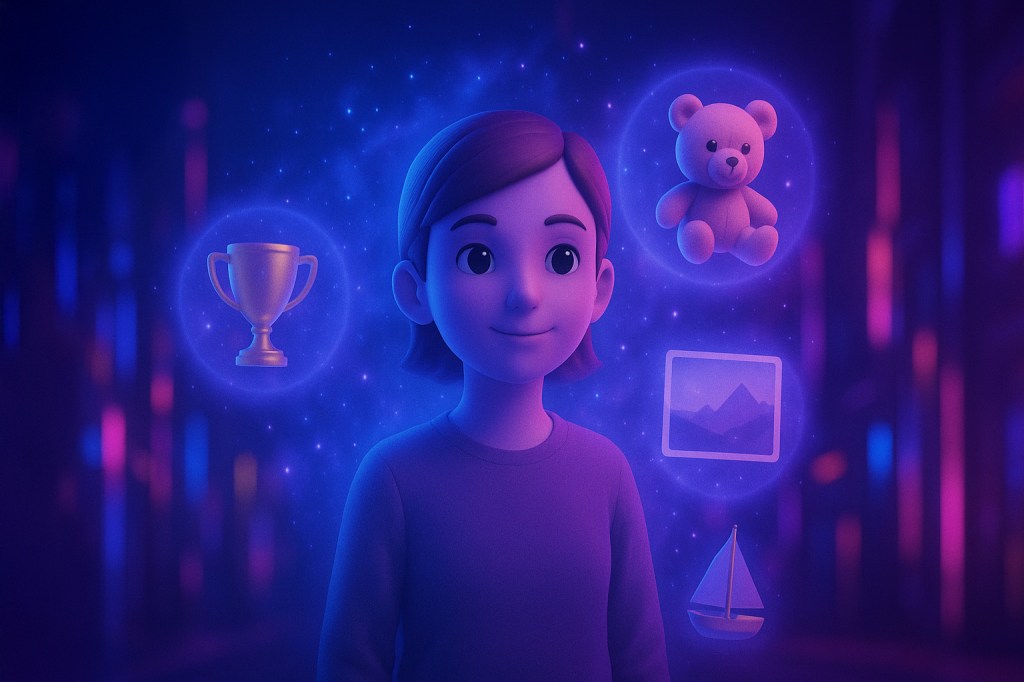
Around your avatar might float what we’ll call your Aura—a bubble of self-expression that shares glimpses of your digital journey:
- Rare trophies from events and games
- Personal mementos, like a VR version of your favorite childhood toy
- Digital art, music, or collectibles that define your taste
Flowing naturally from this idea, your Aura becomes a mini-gallery of meaning, showing others what matters to you before you even speak. It’s a seamless way to express your story visually, without extra effort. mini-gallery of meaning, showing others what matters to you before you even speak.

NFTs, Fungibility, and the Future of VR Ownership
Cryptocurrency is already reshaping how we think about value. In the physical world, money is geographically tied—banking systems, national currencies, and regulations create borders. But VR is boundless, making cryptocurrencies like Ethereum a natural fit for virtual markets.
NFTs, or Non-Fungible Tokens, build on that same blockchain technology. Fungible means interchangeable—like a dollar bill or a bitcoin, which can always be swapped for another of equal value. Non-fungible means unique and irreplaceable. An NFT represents a one-of-a-kind digital asset: a piece of art, an audio track, a virtual home, or an avatar outfit.
Even though an NFT is unique, the digital file it represents isn’t necessarily exclusive. Anyone can copy or view it. So why buy an NFT? Consider the art world: you can print out the Mona Lisa for pennies, but people still pay millions to own the original. It’s about authenticity, provenance, and status.
Games like Second Life have long let people buy virtual homes or clothing for avatars. NFTs make these belongings portable, secure, and provably yours, even across different virtual worlds.
But this raises a philosophical question: should VR mimic real-world scarcity to create value? Or should it embrace digital abundance, where everyone can access what they want without cost? Supporters of scarcity argue that rarity creates meaning. Critics say free access doesn’t make something less special to someone who values it. The future of VR might mirror physical-world inequality—or it might redefine what value truly means.
How NFTs Fit the Metaverse
NFTs have two major roles:
- Digital Belongings – clothing for avatars, rare tools, virtual homes, collectibles.
- Digital Identity – your avatar itself can be tokenized, carrying your verified history and achievements.
Beyond VR, NFTs can even serve as concert tickets, property deeds, or birth certificates, linking the digital and physical worlds. One day, your avatar might hold biometric data as a secure proof of you.
NFTs are how you prove ownership of pieces of the Metaverse—your look, your Aura’s contents, even the memories that define you.
Virtual Graffiti: Impermanence and Permanence
Self-expression in the Metaverse isn’t limited to what you own—it’s also about the marks you leave behind.
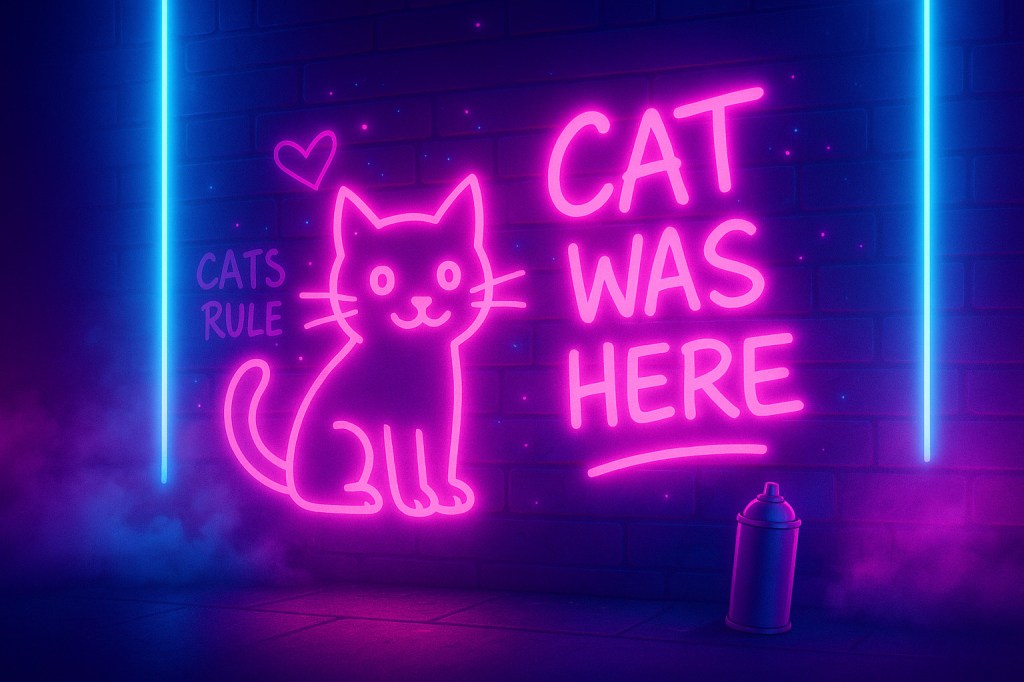
Nintendo’s Splatoon illustrated this with player-made graffiti that appeared temporarily on in-game walls, injecting personality and community into its arenas. Nintendo’s decision to integrate user-generated content in this way went beyond simple aesthetics; it brought life and personality into the otherwise predictable, pre-built, and privatized Nintendo landscapes, showing how player creativity can disrupt and enrich controlled virtual environments. Like real graffiti, it was fleeting yet meaningful, reminding us that some of the most powerful expressions are those that exist only for a moment.
This balance between the ephemeral and the eternal is at the heart of virtual graffiti. In the Metaverse, it could:
- Be personalized tags in shared spaces, like leaving your digital signature for others to discover briefly
- Become interactive, animated art that reshapes itself over time, mirroring shifting moods and trends
- Or be archived permanently on the blockchain, ensuring these creative moments become part of the lasting cultural fabric of virtual worlds
Just as cave paintings tell us about ancient lives and urban street art reflects modern social tensions, digital graffiti records the emotions, trends, and anxieties of online communities. It embodies both impermanence—ever-changing, fragile, transient—and permanence, when preserved as history on decentralized systems.
In this way, the Metaverse offers something unique: a space where you can create art that fades like a memory or becomes a permanent cultural artifact, both equally valuable and reflective of the human instinct to leave a mark.
These expressions also capture the trends, anxieties, and creativity of a time, creating a living cultural history that evolves with online communities. The juxtaposition of impermanence and potential permanence in virtual graffiti mirrors the age-old human instinct to leave a mark, from ancient cave drawings to contemporary digital expressions in the ever-expanding Metaverse.
Why It All Matters
Avatars, Auras, NFTs, and virtual graffiti converge to create freedom of self-expression in ways the physical world can’t:
- You own your identity, not a platform.
- Your belongings and history travel with you, across worlds and time.
- Your creativity leaves a mark, whether temporary or forever preserved.
The Metaverse is more than digital space—it’s a living canvas for individuality, creativity, and ownership. Through the clothes you wear, the Aura you carry, and the graffiti you leave, it’s a place to truly be yourself.
 OverwriteXR